

Market Overview
2025
Q3
U.S. Market: Easing Cycle Resets Investor Sentiment
The U.S. market entered Q3 with a noticeably different tone than earlier in the year. The political turbulence surrounding tariffs and DOGE actions receded, and attention shifted almost entirely to the Federal Reserve’s pivot toward easing. Despite signs of labour-market cooling and a stalled housing recovery, the broader economy proved resilient: consumers continued to spend, inflation moderated, profits held firm, and the AI-driven capex boom remained a powerful contributor to GDP. These conditions supported another strong quarter for U.S. equities.
A notable development was the long-awaited outperformance of small caps, supported by compelling valuations and improving earnings visibility. Meanwhile, AI-related companies continued to attract enthusiasm, even as questions grew about the sustainability of returns on the massive capital being deployed. Still, with rate cuts beginning and economic data stabilizing, the environment for U.S. risk assets remained highly supportive.
Canadian Market: Precious Metals and Small Caps Lead a Powerful Rally
Canadian equities surged in Q3, propelled by soaring precious-metal prices and synchronized strength across small-cap names. Gold reached fresh all-time highs after rising more than 16% during the quarter, while silver climbed over 30%, lifting the materials-heavy TSX Small Cap Index to a robust 20.9% gain—well ahead of the TSX Composite’s 12.5% advance. Despite uneven economic signals, including rising unemployment and a muted GDP recovery, investor sentiment remained firmly positive, supported by falling rates, strong global risk appetite, and increasingly compelling valuations in smaller Canadian companies.
Year-to-date, small caps have now risen more than 36%, extending a leadership trend that began earlier in the year. With inflation nearing the Bank of Canada’s target and further rate cuts likely, the setup for continued small-cap strength remains highly attractive heading into the final quarter of 2025.
Asian Market: North Asia Strength Drives Regional Gains
Asia followed global markets higher, though performance remained uneven across the region. North Asia stood out as the key engine of growth, with China, Taiwan, and Korea benefiting from strong inflows tied to AI infrastructure demand and improving trade sentiment. China’s large-cap technology names recovered meaningfully as investor appetite returned, and consumer trends showed early signs of stabilization.
Elsewhere, markets responded to easing geopolitical tensions and expectations of synchronized global rate cuts. Sectors tied to the AI ecosystem—including hardware, semiconductors, and certain consumer technology industries—led the advance across Asia, while software and more traditional defensives lagged. After several years of volatility, Emerging Markets finally regained their 2021 highs, supported largely by China’s rebound and robust risk appetite globally.
European Market: Signs of Stabilization Amid Improving Tone
European equities regained their footing in Q3 as macro conditions steadied, and tariff volatility eased. While visibility on a full recovery remains limited, several previously depressed industries—chemicals, consumer, and same select industrials—showed early signs of bottoming. Conversations at autumn investor conferences pointed to a more constructive tone than earlier in the year, with management teams emphasizing cost discipline, supply-chain resilience, and renewed focus on digital transformation.
Defence, aerospace, medtech, and energy equipment names delivered noticeably improved outlooks, buoyed by long-term policy initiatives and rising demand visibility. Strong balance sheets across many European corporates also supported an uptick in strategic M&A discussions. Overall, while Europe did not rally as sharply as North America or parts of Asia, the quarter marked a meaningful shift toward stabilization and gradual improvement.
Asian Market: North Asia Strength Drives Regional Gains
Asia followed global markets higher, though performance remained uneven across the region. North Asia stood out as the key engine of growth, with China, Taiwan, and Korea benefiting from strong inflows tied to AI infrastructure demand and improving trade sentiment. China’s large-cap technology names recovered meaningfully as investor appetite returned, and consumer trends showed early signs of stabilization.
Elsewhere, markets responded to easing geopolitical tensions and expectations of synchronized global rate cuts. Sectors tied to the AI ecosystem—including hardware, semiconductors, and certain consumer technology industries—led the advance across Asia, while software and more traditional defensives lagged. After several years of volatility, Emerging Markets finally regained their 2021 highs, supported largely by China’s rebound and robust risk appetite globally.
European Market: Signs of Stabilization Amid Improving Tone
European equities regained their footing in Q3 as macro conditions steadied, and tariff volatility eased. While visibility on a full recovery remains limited, several previously depressed industries—chemicals, consumer, and same select industrials—showed early signs of bottoming. Conversations at autumn investor conferences pointed to a more constructive tone than earlier in the year, with management teams emphasizing cost discipline, supply-chain resilience, and renewed focus on digital transformation.
Defence, aerospace, medtech, and energy equipment names delivered noticeably improved outlooks, buoyed by long-term policy initiatives and rising demand visibility. Strong balance sheets across many European corporates also supported an uptick in strategic M&A discussions. Overall, while Europe did not rally as sharply as North America or parts of Asia, the quarter marked a meaningful shift toward stabilization and gradual improvement.
Quarterly results by strategy



Canadian Small Cap Equity Strategy

Investment Performance (%)
The following table shows the investment performance of the Van Berkom Canadian Small Cap Composite, compared to the S&P/TSX Canadian Small Cap Index and the S&P/TSX Composite Index (as at September 30, 2025).
Returns are calculated using the time-weighted method and presented gross of management and trustee fees and withholding taxes. Returns are annualized for periods longer than 12 months.
*Note: Results are the BMO Small Cap Blended Weighted Index from June 30, 1992 to December 31, 1999 and thereafter the S&P/TSX Canadian Small Cap Index.
** Note : June 30, 1992
Portfolio Positioning
During the third quarter of 2025, the Canadian small-cap market experienced one of the most speculative and distorted environments we have seen in many years. While the TSX Small Cap Index rose approximately +21.7%, our strategy returned +3.6%, resulting in meaningful underperformance. Although disappointing from a relative performance perspective, we believe the drivers of index performance during the quarter were fundamentally misaligned with our investment philosophy.
The quarter was dominated by a powerful resurgence in commodity-driven and speculative trading behavior. Gold and silver surged approximately +16% and +31%, respectively, driving a historic rally in junior mining and precious metals companies. The Materials sector rose roughly +41% and now represents more than 35% of the benchmark, creating a structural headwind for strategies, like ours, that do not participate in capital-destructive mining businesses. Investor flows gravitated heavily toward cannabis, crypto-exposed equities, AI concept stocks, defense names, and heavily shorted securities, all of which we deliberately avoid.
Macroeconomic conditions were mixed. Inflation continued trending toward the 2% target, retail spending remained stable, and housing activity showed signs of resilience. However, unemployment increased above 7%, GDP growth was fragile, and the overall economic environment remained uneven. Despite these realities, market pricing became increasingly detached from fundamentals, supported largely by global rate cut expectations and speculative enthusiasm.
From a factor standpoint, asset allocation detracted approximately 8.9%, primarily due to our underweight in Materials and lack of exposure to Energy. Stock selection detracted approximately 8.7%, as high-quality holdings failed to keep pace with speculative segments of the market. Industrials were particularly challenging, as the sector slowed from +22.6% in Q2 to approximately +5.1% in Q3.
Importantly, the underlying fundamentals of our holdings remained strong. Across the portfolio, companies continued to execute well operationally, with healthy balance sheets, strong free cash flow generation, and improving competitive positioning. We believe this quarter represents another late-cycle environment where speculation temporarily dominated quality, similar to past commodity-driven cycles that ultimately reversed in favor of fundamentals.
Our significant Q3 contributors to performance:
- 5N Plus (+90.3% in Q3, +130.5% YTD) was our largest contributor, benefiting from strong demand for specialty semiconductor materials and continued displacement of Chinese suppliers. The company remains uniquely positioned as a critical non-Chinese supplier to renewable and space-based solar applications.
- AutoCanada (+42.6% in Q3, +80.3% YTD) performed exceptionally well as the company executed against its “Project Elevate” cost reduction plan. EBITDA margins expanded materially, and management announced the divestiture of underperforming U.S. assets, improving both leverage and earnings quality.
- D2L (+31.9% in Q3) rebounded meaningfully after a difficult prior quarter. The company exceeded earnings expectations and raised guidance, while industry disruption following competitor bankruptcies accelerated anticipated market share gains.
These contributors reflected our focus on companies with durable structural advantages, recurring revenue, and improving financial profiles
- MATTR Infrastructure Technologies (-10.7%) declined due to negative sentiment surrounding copper tariffs and weakness in its ShawFlex business. Despite share price weakness, operational progress remained solid, with growing backlog and improved execution.
- Dye & Durham (-22.9%) continued to struggle after announcing delays in filing financial statements related to regulatory review of accounting treatment. Importantly, the underlying business fundamentals did not materially deteriorate, and a post-quarter asset sale supported intrinsic value.
- ATS Automation (-16.2%) was pressured by slower healthcare automation orders and the unexpected departure of its CEO. Despite this, backlog remains healthy and long-term strategic value remains intact.
In each case, we believe price action was driven more by sentiment and positioning than by structural deterioration in business quality.
Portfolio Changes
Q3 was an active quarter from a portfolio management standpoint, as we continued to reallocate capital toward our highest conviction opportunities.
New Positions
- We initiated a position in Knight Therapeutics, a specialty pharmaceutical company focused on licensed and niche medicines across Canada and Latin America, supported by a strong balance sheet and scalable commercial platform.
- We also initiated Kneat.com, a mission-critical software provider focused on digital validation processes in the pharmaceutical industry, where compliance-driven demand creates attractive long-term growth visibility.
Position Increases
- We increased our holdings in Altus Group, reflecting our conviction that recent weakness created attractive long-term entry points.
Position Trims
- We reduced exposure to goeasy, and Pet Valu after strong multi-year performance to manage concentration and valuation risk.
Full Exits
- We fully exited Groupe Dynamite following significant share price appreciation that brought the stock beyond our estimate of intrinsic value.
Throughout the quarter, we remained disciplined in focusing the portfolio around businesses with strong return potential and durable competitive positioning.
Outlook
Looking ahead, we remain constructive on the long-term opportunity set despite near-term market distortions. The current environment is clearly characterized by speculative excess, particularly within precious metals, junior mining equities, and concept-driven technology names. While this behavior may persist in the short term, history strongly suggests that such periods ultimately reverse.
The macro backdrop remains broadly supportive of risk assets, with global easing cycles beginning and recession risks appearing to recede. However, these same conditions have enabled a degree of price behavior that is increasingly disconnected from business fundamentals. We believe the portfolio is well positioned for a normalization phase.
Today, our portfolio trades at an estimated discount to intrinsic value of approximately 12%, while exhibiting superior financial characteristics relative to the benchmark, including stronger balance sheets, higher margins, and superior return on invested capital. Expected earnings growth across the portfolio exceeds 20% annually, despite conservative underlying assumptions.
Over the past three decades, periods of commodity-driven underperformance have consistently been followed by strong phases of outperformance as fundamentals reasserted control. We view the current environment as one of those periods. While the timing is uncertain, we are highly confident that the quality of our holdings will be reflected in long-term returns.
We remain focused on owning durable businesses, maintaining valuation discipline, and compounding shareholder capital through full market cycles. We believe the portfolio is positioned to deliver attractive long-term outcomes once market leadership shifts back toward fundamentals.
Portfolio Changes
Q3 was an active quarter from a portfolio management standpoint, as we continued to reallocate capital toward our highest conviction opportunities.
New Positions
- We initiated a position in Knight Therapeutics, a specialty pharmaceutical company focused on licensed and niche medicines across Canada and Latin America, supported by a strong balance sheet and scalable commercial platform.
- We also initiated Kneat.com, a mission-critical software provider focused on digital validation processes in the pharmaceutical industry, where compliance-driven demand creates attractive long-term growth visibility.
Position Increases
- We increased our holdings in Altus Group, reflecting our conviction that recent weakness created attractive long-term entry points.
Position Trims
- We reduced exposure to goeasy, and Pet Valu after strong multi-year performance to manage concentration and valuation risk.
Full Exits
- We fully exited Groupe Dynamite following significant share price appreciation that brought the stock beyond our estimate of intrinsic value.
Throughout the quarter, we remained disciplined in focusing the portfolio around businesses with strong return potential and durable competitive positioning.
Outlook
Looking ahead, we remain constructive on the long-term opportunity set despite near-term market distortions. The current environment is clearly characterized by speculative excess, particularly within precious metals, junior mining equities, and concept-driven technology names. While this behavior may persist in the short term, history strongly suggests that such periods ultimately reverse.
The macro backdrop remains broadly supportive of risk assets, with global easing cycles beginning and recession risks appearing to recede. However, these same conditions have enabled a degree of price behavior that is increasingly disconnected from business fundamentals. We believe the portfolio is well positioned for a normalization phase.
Today, our portfolio trades at an estimated discount to intrinsic value of approximately 12%, while exhibiting superior financial characteristics relative to the benchmark, including stronger balance sheets, higher margins, and superior return on invested capital. Expected earnings growth across the portfolio exceeds 20% annually, despite conservative underlying assumptions.
Over the past three decades, periods of commodity-driven underperformance have consistently been followed by strong phases of outperformance as fundamentals reasserted control. We view the current environment as one of those periods. While the timing is uncertain, we are highly confident that the quality of our holdings will be reflected in long-term returns.
We remain focused on owning durable businesses, maintaining valuation discipline, and compounding shareholder capital through full market cycles. We believe the portfolio is positioned to deliver attractive long-term outcomes once market leadership shifts back toward fundamentals.
U.S. Small Cap Equity Strategy

Investment Performance (%)
The following table shows the investment performance of the Van Berkom U.S. Small Cap Composite (in U.S. dollars), compared to the Russell 2000 Small Cap Index and the S&P 500 Index (as at September 30, 2025).
Returns are calculated using the time-weighted method and presented gross of management and trustee fees and withholding taxes. Returns are annualized for periods longer than 12 months.
* Note : June 30, 2000
Portfolio Positioning
During the third quarter of 2025, our U.S. small-cap strategy navigated one of the most speculative and disconnected market environments we have experienced in recent years. While equity markets advanced significantly, the composition of returns was inconsistent with our disciplined, quality-focused investment philosophy. Market leadership was driven by low-quality, narrative-driven segments of the market, creating a difficult backdrop for portfolios built around durable fundamentals.
The macroeconomic environment was broadly supportive. Inflation continued to moderate, consumer spending remained resilient, and corporate earnings proved more stable than feared. Investor sentiment improved sharply as markets increasingly priced in Federal Reserve rate cuts and focused heavily on the acceleration of AI-related capital expenditure. These dynamics contributed to a powerful rally in risk assets and a sharp re-rating of speculative parts of the market.
Small-cap stocks began to outperform large caps, as expected, supported by historically attractive relative valuations, improving earnings expectations, and the early stages of monetary easing. However, the leadership within small caps was highly concentrated in areas that were fundamentally inconsistent with our process — including unprofitable technology, quantum computing, crypto-exposed companies, heavily shorted stocks, biotech, and speculative AI-related names.
Operationally, our portfolio companies delivered very strong results. During the reporting season in late July and early August, we saw excellent execution across our holdings. Approximately 89% of the portfolio exceeded EPS expectations by an average of 18%, while revenue, EBITDA, and EPS grew by roughly 12%, 15%, and 15% year-over-year, respectively. Following earnings, our relative performance versus the Russell 2000 peaked at approximately +450 basis points.
However, as the quarter progressed into September, market behavior became increasingly disconnected from company fundamentals. Security selection became the primary drag on performance, as capital flowed aggressively into lower-quality and highly speculative stocks. Sector allocation also detracted due to our lack of exposure to Energy (+17.8%) and Materials (+24.3%), and a lower weighting in Information Technology (+16%). Despite this environment, we maintained our commitment to owning businesses with strong competitive positions, high returns on capital, and durable earnings power.
Significant contributors to performance in Q3 were:
- Primoris Services (+83%) delivered exceptional performance, driven by strong demand across power delivery, data centers, telecommunications, pipelines, and renewable infrastructure. Management raised full-year guidance and backlog growth remained robust.
- Laureate Education (+37%) performed well following consistent earnings execution and improving investor recognition of its strong positioning in Latin American higher education.
- Installed Building Products (IBP) (+49%) delivered one of the strongest earnings surprises in the portfolio, demonstrating operational resilience and market share gains despite a soft housing environment.
- RadNet (+59%) contributed quickly as the market recognized the quality of its diagnostic imaging platform.
- Additional contributors included Chart Industries (prior to exit), Armstrong World Industries, Federal Signal, and SPX Technologies, all of which generated strong absolute returns during the quarter.
Stocks that detracted from performance in Q3 were:
- Shake Shack (-32%) declined sharply after a strong prior quarter, despite reporting results ahead of expectations and raising EBITDA guidance.
- Iridium Communications (-27%) weakened materially amid growing concerns around satellite spectrum competition and perceived threats from Starlink.
- WillScot Holdings (-22%) was pressured by persistent weakness in non-residential construction and more cautious end-market demand commentary.
We believe the weakness in these holdings was largely driven by market structure and sentiment rather than deterioration in the long-term business fundamentals.
Portfolio Changes
We were highly active during the third quarter, using market volatility to improve the long-term quality of the portfolio.
New Positions
- BrightView, the leading U.S. commercial landscaping services company, attracted by its recurring revenue base, operational turnaround, and consolidation opportunities.
- RadNet, a high-quality diagnostic imaging provider benefitting from long-term secular demand and potential AI-enabled clinical applications.
- SPS Commerce, a mission-critical cloud-based supply chain software platform with strong customer stickiness and network effects.
- EPAM Systems, a global digital engineering and IT services leader, positioned to benefit from long-term enterprise modernization and AI integration.
Position Increases
We increased our positions in Privia Health, Euronet, ESAB, Chemed, WillScot, Shake Shack, and RLI during periods of valuation-driven weakness.
Full Exits
- Chart Industries following a formal acquisition process and competing offers.
- Iridium Communications after a 14-year holding period as the long-term growth outlook became less certain amid rising competitive threats.
- HealthEquity as the interest-rate-driven tailwinds that previously benefitted the business began to normalize.
- Silicon Laboratories after an 11-year holding period due to increased business volatility and valuation considerations.
Position Trims
We trimmed Primoris, Laureate, Installed Building Products, Somnigroup, Federal Signal, SPX Technologies, Armstrong World Industries, and Ormat to maintain valuation discipline and manage concentration.
Outlook
Looking forward, we believe the market remains in a speculative phase that could extend further in the near term. Falling interest rates, supportive fiscal policy, and continued enthusiasm around AI infrastructure spending have created conditions where lower-quality companies are being rewarded while fundamentals are temporarily ignored.
Despite this backdrop, we remain encouraged by the fundamental health of our portfolio. Our holdings continue to generate strong free cash flow, maintain conservative balance sheets, and deliver consistent organic growth. The portfolio currently exhibits returns on equity and invested capital near or above 20%, with EBITDA margins approaching 25% and a conservative five-year earnings growth outlook of approximately 13% annually.
Valuations remain attractive. We estimate that the portfolio is trading at a 10–15% discount to intrinsic value, even as broader market indices approach historically elevated levels. This valuation gap reinforces our belief that the current environment presents a compelling long-term opportunity.
We remain confident in our process and in the quality of our portfolio holdings. History suggests that periods of extreme speculation are eventually followed by strong relative performance for fundamentally driven strategies. While the timing of a reversal is uncertain, we believe that companies with durable competitive positions, strong balance sheets, and repeatable earnings power will ultimately be recognized by the market.
We see this period not as a structural challenge, but as a cyclical opportunity, and we remain focused on owning the right businesses and positioning the portfolio to benefit fully when market leadership shifts back toward fundamentals.
We are entering the second half of 2025 with confidence in our small-cap portfolio. Recent volatility provided opportunities to increase exposure to high-quality names at attractive valuations. Today, our portfolio exhibits materially better financial characteristics than the benchmark, including stronger balance sheets, superior earnings growth, higher profit margins and enhanced returns on equity and invested capital. We continue to focus on companies with strong fundamentals and compelling long-term growth profiles. Historical results show that, assuming reasonable valuations, long-term equity returns are largely driven by earnings growth.
Our portfolio companies have consistently delivered stronger earnings growth than both small- and large-cap benchmarks over the past 25 years. We expect this trend to continue, supporting our outlook for outperformance over full market cycles. While the broader market may remain sensitive to macro and political developments in the near term, we believe our disciplined focus on quality, valuation and earnings power leaves us well positioned for the period ahead. With all key quality metrics well above benchmark levels, we believe the portfolio is well-positioned for long-term outperformance.
Position Increases
We increased our positions in Privia Health, Euronet, ESAB, Chemed, WillScot, Shake Shack, and RLI during periods of valuation-driven weakness.
Full Exits
- Chart Industries following a formal acquisition process and competing offers.
- Iridium Communications after a 14-year holding period as the long-term growth outlook became less certain amid rising competitive threats.
- HealthEquity as the interest-rate-driven tailwinds that previously benefitted the business began to normalize.
- Silicon Laboratories after an 11-year holding period due to increased business volatility and valuation considerations.
Position Trims
We trimmed Primoris, Laureate, Installed Building Products, Somnigroup, Federal Signal, SPX Technologies, Armstrong World Industries, and Ormat to maintain valuation discipline and manage concentration.
Outlook
Looking forward, we believe the market remains in a speculative phase that could extend further in the near term. Falling interest rates, supportive fiscal policy, and continued enthusiasm around AI infrastructure spending have created conditions where lower-quality companies are being rewarded while fundamentals are temporarily ignored.
Despite this backdrop, we remain encouraged by the fundamental health of our portfolio. Our holdings continue to generate strong free cash flow, maintain conservative balance sheets, and deliver consistent organic growth. The portfolio currently exhibits returns on equity and invested capital near or above 20%, with EBITDA margins approaching 25% and a conservative five-year earnings growth outlook of approximately 13% annually.
Valuations remain attractive. We estimate that the portfolio is trading at a 10–15% discount to intrinsic value, even as broader market indices approach historically elevated levels. This valuation gap reinforces our belief that the current environment presents a compelling long-term opportunity.
We remain confident in our process and in the quality of our portfolio holdings. History suggests that periods of extreme speculation are eventually followed by strong relative performance for fundamentally driven strategies. While the timing of a reversal is uncertain, we believe that companies with durable competitive positions, strong balance sheets, and repeatable earnings power will ultimately be recognized by the market.
We see this period not as a structural challenge, but as a cyclical opportunity, and we remain focused on owning the right businesses and positioning the portfolio to benefit fully when market leadership shifts back toward fundamentals.
We are entering the second half of 2025 with confidence in our small-cap portfolio. Recent volatility provided opportunities to increase exposure to high-quality names at attractive valuations. Today, our portfolio exhibits materially better financial characteristics than the benchmark, including stronger balance sheets, superior earnings growth, higher profit margins and enhanced returns on equity and invested capital. We continue to focus on companies with strong fundamentals and compelling long-term growth profiles. Historical results show that, assuming reasonable valuations, long-term equity returns are largely driven by earnings growth.
Our portfolio companies have consistently delivered stronger earnings growth than both small- and large-cap benchmarks over the past 25 years. We expect this trend to continue, supporting our outlook for outperformance over full market cycles. While the broader market may remain sensitive to macro and political developments in the near term, we believe our disciplined focus on quality, valuation and earnings power leaves us well positioned for the period ahead. With all key quality metrics well above benchmark levels, we believe the portfolio is well-positioned for long-term outperformance.
U.S. Small-Mid Cap Equity Strategy
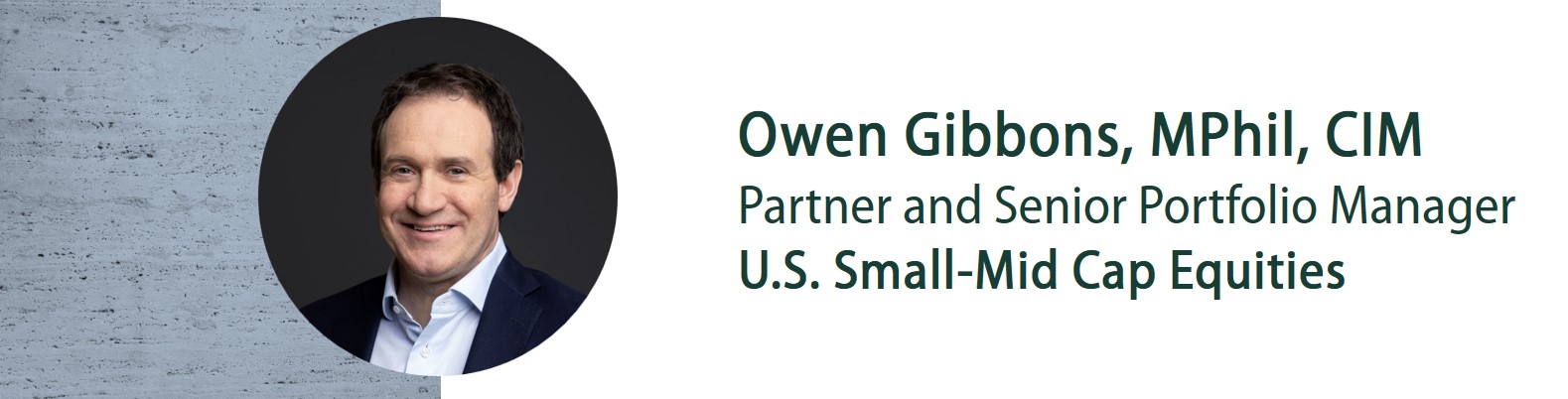
Investment Performance (%)
The following table shows the investment performance of the Van Berkom U.S. Small-Mid Cap Composite (in U.S. dollars), compared to the Russell 2500 Small Cap Index (as at September 30, 2025).
Returns are calculated using the time-weighted method and presented gross of management and trustee fees and withholding taxes. Returns are annualized for periods longer than 12 months.
* Note : September 30, 2017
Portfolio Positioning
During the third quarter of 2025, our U.S. small–mid cap strategy experienced one of the most challenging market environments since the strategy’s inception. The quarter was dominated by extreme speculative behavior, with market leadership driven almost entirely by artificial intelligence-related narratives, quantum computing, crypto-exposed equities, and highly promotional concept stocks. This created a difficult backdrop for a portfolio deliberately constructed around durable fundamentals, profitability, and long-term compounding.
Investor sentiment shifted aggressively toward a “risk-on” posture, particularly in September, as declining interest rate expectations ignited renewed enthusiasm for speculative areas of the market. This environment increasingly resembled the late-1990s technology bubble, with capital flowing indiscriminately toward story-driven companies and away from established businesses with real earnings power. We observed a growing willingness among investors to price cyclical industrial and infrastructure businesses as if they possessed recurring, software-like economics simply because of AI-related exposure.
While the AI buildout represents a meaningful long-term thematic opportunity, we believe current market pricing assumes a degree of profitability and persistence that is unlikely to materialize across much of the speculative universe. At the same time, traditional software companies were broadly de-rated on the assumption that AI would rapidly commoditize their existing business models, a risk we believe remains overstated at this stage.
From a portfolio construction perspective, stock selection was the primary driver of underperformance, particularly within Information Technology, Industrials, and Health Care. Sector allocation was modestly additive, benefiting from our underweight to Consumer Staples and Real Estate and an overweight to Industrials. However, that benefit was overwhelmed by aggressive valuation compression across our holdings.
This was especially frustrating given that underlying fundamentals remained solid. The Q2 reporting season, which occurred during the quarter, was strong across the portfolio. The vast majority of our companies met or exceeded expectations, and very few displayed meaningful deterioration in business quality. Despite this, multiple compression accelerated as capital rotated toward low-quality, narrative-driven stocks.
Within Information Technology, five of our seven holdings produced negative returns, despite solid operational performance. Only PTC and Entegris outperformed the broader technology sector. In Industrials, seven of our twelve holdings underperformed despite steady operational execution, as business services companies with technology exposure were broadly labeled “AI losers.” Despite these challenges, we remain confident that the portfolio is positioned in resilient, profitable businesses with strong balance sheets, and we believe broad indices have become increasingly vulnerable to a correction. The portfolio, by contrast, has become increasingly undervalued.
Substantial contributors to our Q3 performance include:
- Laureate Education (+37%) generated strong returns, benefiting from its leading positions in Mexico and Peru and strong seasonal execution.
- Maximus (+34%) performed well after delivering strong organic revenue growth, margin expansion, and raising full-year guidance.
- Installed Building Products (IBP) (+48%) was one of our strongest performers, delivering results materially ahead of expectations despite ongoing housing market volatility.
- Grocery Outlet (+32%) improved as operational execution stabilized and margins began to recover.
Additional contributors included Construction Partners (+22%), Somnigroup (+28%), Grand Canyon Education (+19%), PTC (+22%), and Armstrong (+~15%).
A number of holdings detracted materially, largely due to valuation compression despite stable fundamentals:
- Shake Shack (-32%) was the largest detractor. The stock declined following cautious near-term messaging, despite the long-term thesis remaining intact.
- WillScot Holdings (-22%) struggled due to continued weakness in non-residential construction and multiple rounds of tempered guidance.
- Euronet (-11%) underperformed despite delivering strong operational results and consistent earnings growth.
- Paylocity (-10%) declined despite beating expectations and raising guidance, as investors focused on perceived AI disruption in payroll and HR software.
We believe these declines were primarily driven by sentiment and factor rotations rather than structural business deterioration.
Portfolio Changes
We made several high-conviction portfolio adjustments during the quarter.
New Positions
- We initiated a position in BrightView (BV), the leading U.S. commercial landscaping services provider, attracted by its highly recurring revenue base, route density advantages, and consolidation opportunity under a proven management team.
- We initiated a position in Lazard (LAZ), based on its strong franchise in financial advisory and asset management, improving industry conditions, and attractive valuation supported by significant net cash and operational restructuring.
Full Exit
- We fully exited Iridium Communications, following many years of ownership. While the company successfully executed the replenishment of its satellite constellation, we observed slowing growth, rising capital intensity, and increasing competitive pressure. The acquisition of spectrum by Starlink materially altered the competitive landscape and further weakened sentiment. We concluded the path to a sustainable re-rating had become increasingly uncertain and redeployed capital toward higher-conviction opportunities.
Beyond this, we remained disciplined in recycling capital toward our highest conviction holdings as valuation opportunities emerged.
Outlook
Looking ahead, we remain cautious on the near-term market environment. We believe the current market phase is characterized by speculative excess, passive capital flows, and valuation distortions that recall the late-1990s technology bubble. While artificial intelligence represents a genuine and powerful technological shift, the current market is pricing in near-perfect outcomes in terms of timing, monetization, and market structure — expectations we believe are unrealistic.
Falling interest rates, expectations of deregulation, and political tailwinds may extend speculative behavior further. However, history suggests that such extremes eventually unwind, often quickly and violently. Reference points such as elevated CAPE ratios, highlighted by major global central banks, reinforce our concern that valuation risk across broad indices is rising.
Despite those risks, we are encouraged by how the portfolio is positioned. Our holdings are characterized by strong competitive moats, recurring or resilient revenue streams, and sustainable free cash flow generation. Many of our companies now trade at multi-year low valuation multiples, not due to business impairment, but because of indiscriminate market behavior.
We believe this has created a compelling asymmetry: the index appears increasingly fragile, while the portfolio offers substantial upside potential once price and fundamentals realign. Active management is particularly valuable in this environment, as passive capital flows have distorted pricing and created wide dispersion between price and value.
While we recognize that short-term relative performance may remain challenged if speculative behavior persists, we view this period as an attractive entry point for long-term investors. We remain confident that our focus on balance sheet strength, return on capital, and disciplined valuation will ultimately be rewarded as fundamentals reassert themselves over time.
We believe these declines were primarily driven by sentiment and factor rotations rather than structural business deterioration.
Portfolio Changes
We made several high-conviction portfolio adjustments during the quarter.
New Positions
- We initiated a position in BrightView (BV), the leading U.S. commercial landscaping services provider, attracted by its highly recurring revenue base, route density advantages, and consolidation opportunity under a proven management team.
- We initiated a position in Lazard (LAZ), based on its strong franchise in financial advisory and asset management, improving industry conditions, and attractive valuation supported by significant net cash and operational restructuring.
Full Exit
- We fully exited Iridium Communications, following many years of ownership. While the company successfully executed the replenishment of its satellite constellation, we observed slowing growth, rising capital intensity, and increasing competitive pressure. The acquisition of spectrum by Starlink materially altered the competitive landscape and further weakened sentiment. We concluded the path to a sustainable re-rating had become increasingly uncertain and redeployed capital toward higher-conviction opportunities.
Beyond this, we remained disciplined in recycling capital toward our highest conviction holdings as valuation opportunities emerged.
Outlook
Looking ahead, we remain cautious on the near-term market environment. We believe the current market phase is characterized by speculative excess, passive capital flows, and valuation distortions that recall the late-1990s technology bubble. While artificial intelligence represents a genuine and powerful technological shift, the current market is pricing in near-perfect outcomes in terms of timing, monetization, and market structure — expectations we believe are unrealistic.
Falling interest rates, expectations of deregulation, and political tailwinds may extend speculative behavior further. However, history suggests that such extremes eventually unwind, often quickly and violently. Reference points such as elevated CAPE ratios, highlighted by major global central banks, reinforce our concern that valuation risk across broad indices is rising.
Despite those risks, we are encouraged by how the portfolio is positioned. Our holdings are characterized by strong competitive moats, recurring or resilient revenue streams, and sustainable free cash flow generation. Many of our companies now trade at multi-year low valuation multiples, not due to business impairment, but because of indiscriminate market behavior.
We believe this has created a compelling asymmetry: the index appears increasingly fragile, while the portfolio offers substantial upside potential once price and fundamentals realign. Active management is particularly valuable in this environment, as passive capital flows have distorted pricing and created wide dispersion between price and value.
While we recognize that short-term relative performance may remain challenged if speculative behavior persists, we view this period as an attractive entry point for long-term investors. We remain confident that our focus on balance sheet strength, return on capital, and disciplined valuation will ultimately be rewarded as fundamentals reassert themselves over time.
Global Small Cap Equity Strategy

Investment Performance (%)
The following table shows the investment performance of the Van Berkom Global Small Cap Fund, compared to the MSCI ACWI Small Cap Index in CAD (as at September 30, 2025).
Returns are calculated using the time-weighted method and presented gross of management and trustee fees and withholding taxes. Returns are annualized for periods longer than 12 months.
* Note : July 31, 2022
Portfolio Positioning
The third quarter of 2025 was a striking reminder of how quickly market sentiment can shift from anxiety to euphoria. Concerns around tariffs and economic slowdown faded rapidly as markets rallied on the back of rate cuts, resilient earnings, and a powerful acceleration in AI-related investment. The result was one of the most powerful six-month recoveries in modern market history, with the MSCI ACWI rising approximately 36% from the April lows, a move comparable only to the rebounds following the Global Financial Crisis and the COVID market trough.
Across geographies, a similar pattern emerged: a broad-based risk-on rally that consistently favored low-quality and speculative assets. While these conditions distorted short-term performance, we view them as creating a unique opportunity to identify mispriced businesses that are quietly compounding value through fundamentals. We continued to focus on those opportunities throughout the quarter.
In the United States, a firm Federal Reserve easing cycle, a resilient consumer, and a major AI-driven capital expenditure boom reignited investor optimism. The recession narrative that dominated earlier in the year was largely priced out as lower inflation and falling yields restored confidence. Small-cap equities finally began to outperform large caps, supported by multi-decade-low relative valuations, improving earnings momentum, and the early stages of monetary easing. However, the tone of the market was uneven. Quality underperformed, while unprofitable technology, AI, and quantum computing themes dominated leadership. While we acknowledge the near-term excitement around AI, we believe there are increasing questions as to whether the staggering capital being deployed will ultimately translate into attractive shareholder returns. History suggests industrial buildouts tend to benefit society well before they benefit shareholders.
In Canada, market distortions were even more extreme. The TSX Small Cap Index rose approximately 21% in Q3, driven by a 41% surge in the Materials sector, as gold and silver rose roughly 16% and 31%, respectively. This commodity-driven momentum, amplified by demand for perceived inflation hedges and U.S. dollar weakness, created one of the most distorted market environments in recent memory. Fundamentals were largely ignored, as capital concentrated in speculative, pre-profitability names across cannabis, crypto, AI, and junior mining.
In Europe, the tone was more sober and gradually constructive. At pan-European investor meetings, we observed evidence that several depressed sectors — chemicals, consumer, and select industrials — have stabilized. Commentary from MedTech, Defence & Aerospace, and Energy Equipment companies was more positive. While tariff uncertainty and currency volatility remain, management teams are responding with operational discipline. We continue to find opportunities linked to European Sovereignty, including digitalization, energy independence, healthcare innovation, and supply-chain resilience.
In Asia, China and broader regional markets outperformed, supported by easing financial conditions and renewed capital inflows. The MSCI China Index rose approximately 20.8% in USD terms, with large technology companies benefiting from AI and recovering consumer demand. Japan’s market reforms and fiscal support improved sentiment, although our domestically oriented Japanese holdings lagged as investors favored exporters. Across Asia, valuation dispersion remains wide, creating attractive conditions for bottom-up stock selection.
From a portfolio perspective, following a very strong second quarter, we delivered a +9.14% return in Q3 and a +21.4% return year-to-date. While we lagged the benchmark by approximately -1.3% in Q3, we are comfortable with the source of this underperformance, as it was driven primarily by exposure we deliberately do not own. Over a quarter of the portfolio delivered returns exceeding 20%, and three holdings were materially re-rated following private equity take-private offers. Europe was a standout region, contributing more than 200bps of relative performance.
In Q3 2025, key portfolio performers included these names:
- JTC plc (+55.9%) benefited from competing take-private interest from private equity firms. The stock moved rapidly toward our estimate of intrinsic value, reflecting recognition of the quality of the underlying business.
- Primoris (+79.8%) delivered exceptional operational performance, beating expectations and materially raising guidance, driven by strong execution and exposure to infrastructure, energy, and data center buildout.
- AutoStore (+56.6%) rebounded sharply as results exceeded expectations after a period of significant derating earlier in the year.
These contributors reflected our focus on high-quality franchises with strong management and long-term compounding potential.
Several holdings detracted during the quarter due to sentiment and market structure rather than fundamental impairment:
- Globant (-35.3%) declined after lowering full-year guidance amid broader negative sentiment across digital services.
- Shake Shack (-32.1%) pulled back despite strong operational execution and continued margin improvement.
- Munters (-16.3%) was pressured by weakness in battery-related end markets and concerns around data center cooling demand.
In each case, we believe long-term business quality remains intact.
Portfolio Changes
The quarter was highly active due to three take-private transactions, which allowed us to redeploy capital into new opportunities created by market dislocations. We initiated several new positions:
- Modine Manufacturing, a global leader in thermal management technologies benefiting from electrification, data center expansion, and energy efficiency trends.
- XPS Pension Group, a leading UK pension consulting and administration business with recurring, resilient revenues.
- Lazard, a global financial advisory and asset management firm benefitting from improving activity levels and internal transformation.
- Knight Therapeutics, a specialty pharmaceutical company focused on licensing and commercializing innovative medicines in niche markets.
- D2L, a cloud-based education technology company with strong renewal rates and improving profitability.
- Privia Health, a technology-enabled healthcare services business aligned with value-based care trends.
- EPAM Systems, a global leader in digital engineering and enterprise IT modernization.
- BrightView Holdings, the largest U.S. commercial landscaping services company, benefitting from recurring revenue and consolidation opportunities.
We exited our position in Johns Lyng Group and TechnoPro holdings due to the take-private transaction announced and Armstrong World Industries to optimize for relative opportunities.
Outlook
Looking ahead, we remain mindful of the speculative nature of the current market. In the United States, the post-relief rally has evolved into an AI-driven frenzy. As we approach year-end, market attention will focus on the pace of Federal Reserve rate cuts, the potential resolution of U.S.–China trade tensions, and the prospects for a ceasefire in Ukraine. Any disappointment in these areas could trigger a sharp market correction.
From a fundamental perspective, the U.S. economy remains on relatively solid footing. Fiscal stimulus initiatives and trillions of dollars of AI-related capital spending continue to support corporate confidence and investment. At the same time, we are beginning to observe early signs of stress at the consumer level, with softening labor conditions and the persistent impact of a high cost of living.
In Europe, visibility on the pace of recovery remains limited, but sentiment is slowly improving. A potential end to the conflict in Ukraine could materially improve confidence, particularly in industrial and technology sectors. We continue to focus on businesses capable of executing self-help initiatives and benefiting from secular growth in digital transformation, healthcare, and energy independence.
In Asia, long-term growth remains intact, supported by easing financial conditions and improving trade dynamics. China’s growing technological capabilities are reshaping global competitive dynamics, with potential implications for industry profit pools worldwide.
Across all regions, we remain focused on owning resilient businesses that quietly compound value through strong execution, disciplined capital allocation, and durable competitive advantages. While near-term market behavior remains difficult to predict, we remain highly confident in the long-term prospects of our portfolio and believe that, over time, fundamentals will reassert themselves as the primary driver of returns.
Several holdings detracted during the quarter due to sentiment and market structure rather than fundamental impairment:
- Globant (-35.3%) declined after lowering full-year guidance amid broader negative sentiment across digital services.
- Shake Shack (-32.1%) pulled back despite strong operational execution and continued margin improvement.
- Munters (-16.3%) was pressured by weakness in battery-related end markets and concerns around data center cooling demand.
In each case, we believe long-term business quality remains intact.
Portfolio Changes
The quarter was highly active due to three take-private transactions, which allowed us to redeploy capital into new opportunities created by market dislocations. We initiated several new positions:
- Modine Manufacturing, a global leader in thermal management technologies benefiting from electrification, data center expansion, and energy efficiency trends.
- XPS Pension Group, a leading UK pension consulting and administration business with recurring, resilient revenues.
- Lazard, a global financial advisory and asset management firm benefitting from improving activity levels and internal transformation.
- Knight Therapeutics, a specialty pharmaceutical company focused on licensing and commercializing innovative medicines in niche markets.
- D2L, a cloud-based education technology company with strong renewal rates and improving profitability.
- Privia Health, a technology-enabled healthcare services business aligned with value-based care trends.
- EPAM Systems, a global leader in digital engineering and enterprise IT modernization.
- BrightView Holdings, the largest U.S. commercial landscaping services company, benefitting from recurring revenue and consolidation opportunities.
We exited our position in Johns Lyng Group and TechnoPro holdings due to the take-private transaction announced and Armstrong World Industries to optimize for relative opportunities.
Outlook
Looking ahead, we remain mindful of the speculative nature of the current market. In the United States, the post-relief rally has evolved into an AI-driven frenzy. As we approach year-end, market attention will focus on the pace of Federal Reserve rate cuts, the potential resolution of U.S.–China trade tensions, and the prospects for a ceasefire in Ukraine. Any disappointment in these areas could trigger a sharp market correction.
From a fundamental perspective, the U.S. economy remains on relatively solid footing. Fiscal stimulus initiatives and trillions of dollars of AI-related capital spending continue to support corporate confidence and investment. At the same time, we are beginning to observe early signs of stress at the consumer level, with softening labor conditions and the persistent impact of a high cost of living.
In Europe, visibility on the pace of recovery remains limited, but sentiment is slowly improving. A potential end to the conflict in Ukraine could materially improve confidence, particularly in industrial and technology sectors. We continue to focus on businesses capable of executing self-help initiatives and benefiting from secular growth in digital transformation, healthcare, and energy independence.
In Asia, long-term growth remains intact, supported by easing financial conditions and improving trade dynamics. China’s growing technological capabilities are reshaping global competitive dynamics, with potential implications for industry profit pools worldwide.
Across all regions, we remain focused on owning resilient businesses that quietly compound value through strong execution, disciplined capital allocation, and durable competitive advantages. While near-term market behavior remains difficult to predict, we remain highly confident in the long-term prospects of our portfolio and believe that, over time, fundamentals will reassert themselves as the primary driver of returns.
